Osteopathie Schule Deutschland programme · Baku

Osteopatiya Akademiyası

Learn osteopathy systematically, step by step, from teachers with international experience

A 4-year, 40-module osteopathy programme for physicians, physiotherapists and senior-year students in these disciplines. Every month, teachers invited from Germany and Türkiye give 2–3 days of theoretical and practical lessons in Baku.

  • 4 years40 modules
  • 1 a monthmodule: at the weekend, 2–3 days
  • OSDcurriculum of Osteopathie Schule Deutschland, Germany
  • Year 3the first group started its third year in September 2026
  • BakuELF Center, Rəşid Behbudov küçəsi 112

About the Academy in brief

The Osteopathy Academy provides osteopathy education in Azerbaijan on the programme of Osteopathie Schule Deutschland (OSD), Germany.

The programme is delivered jointly with OSD's cooperation partner in Türkiye, the Osteopathic College of Turkey (OCT). Lessons are taught by OSD teachers from Germany and osteopaths invited from Türkiye. The Academy is hosted by ELF Center in Baku.

Read more: About the Academy

  1. December 2024The first group began its training.
  2. 2024–2026Two academic years have been completed; the students have passed their annual examinations.
  3. 2026–2027The first group is studying in year 3.

Strengths of the programme

Why this programme?

OSD curriculum

The programme is based on the curriculum of Osteopathie Schule Deutschland, a German school that has been operating since 1999. The modules cover all the main areas of osteopathy, from fascia to visceral and cranial osteopathy, and from differential diagnosis to clinical integration.
International teaching staff

Lessons are taught by Osteopathie Schule Deutschland teachers from Germany and by Turkish osteopathy instructors accredited by Osteopathie Schule Deutschland.

Module system

Modules held once a month, at the weekend, make it possible to study without interrupting your work.

Theory and practice together

Each topic is learnt through theoretical explanation, the teacher's demonstration and supervised practice by the students.

Teaching materials

A printed booklet for each module and a video archive open to students only.

A focus on safety

Radiology, differential diagnosis and clinical reasoning are taught as separate modules in the programme. The aim is not only to teach techniques, but also to teach how to recognise in good time the conditions that are not suited to the osteopathic approach.

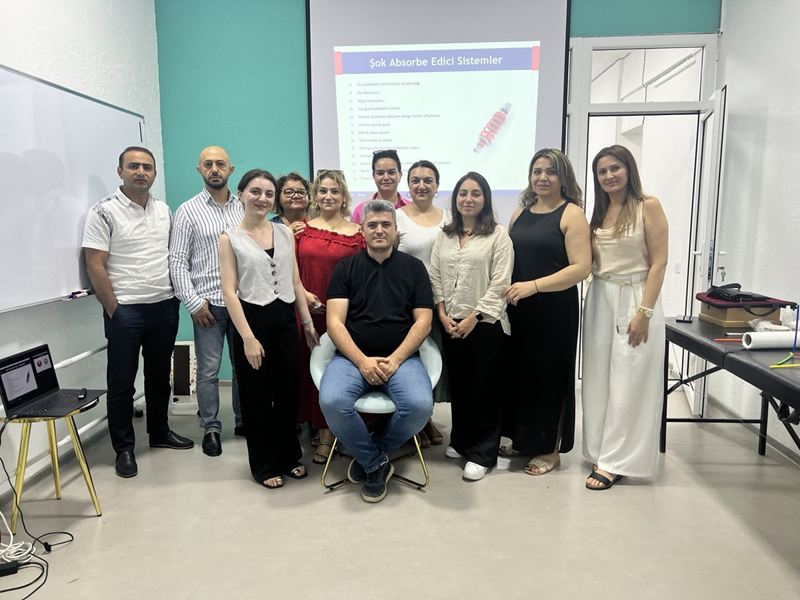
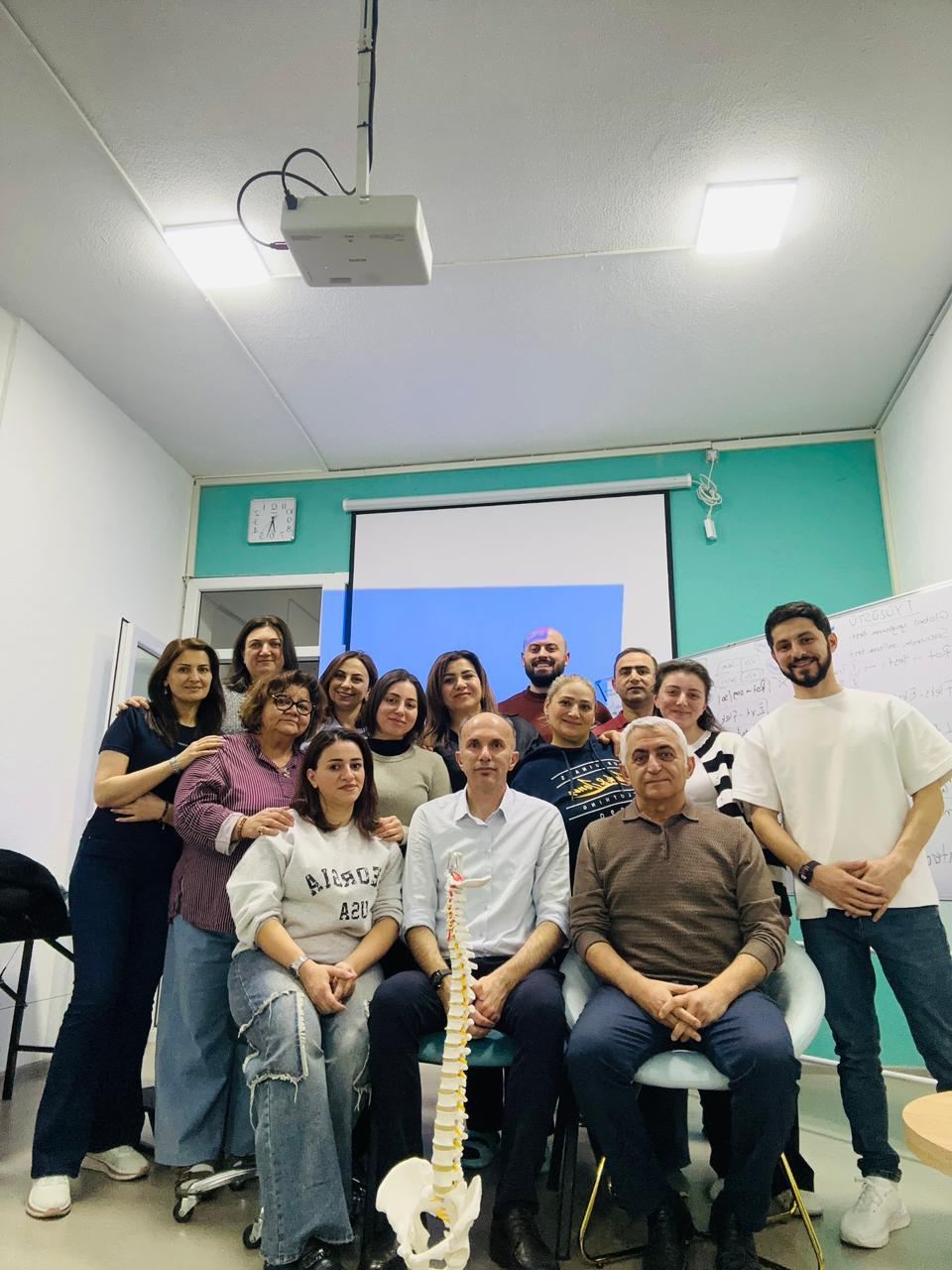
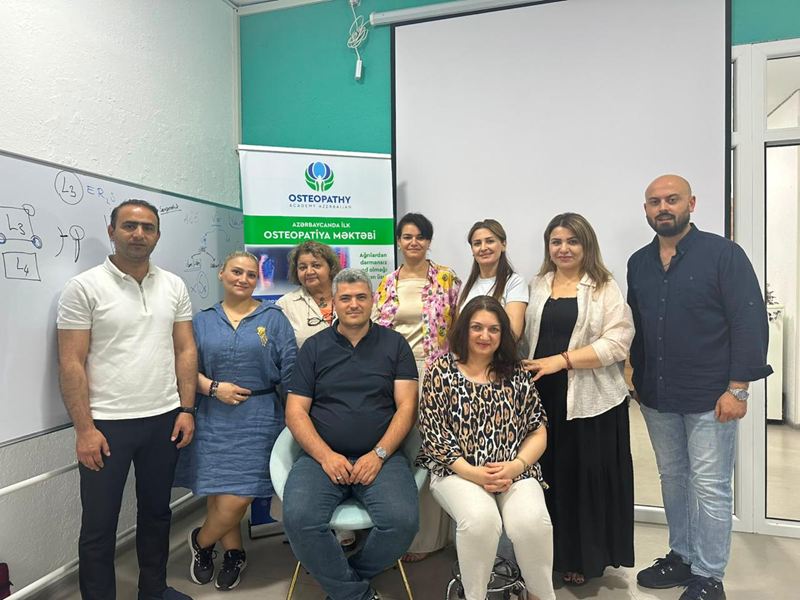
Students and teachers in the classroom, photographed together with an anatomical model of the spine.
A lesson with an anatomical model of the spine

4 years · 40 modules

The programme year by year

Completed

Academic year 1

December 2024 – August 2025

  • Fascia 1
  • Visceral osteopathy 1
  • Cranial osteopathy 1
  • Autonomic nervous system
  • Pelvis and sacrum
  • Foot–ankle–knee
  • General osteopathic treatment
  • Radiology
  • Clinical anatomy and biomechanics
  • Integration and examination
Completed

Academic year 2

October 2025 – July 2026

  • Upper limb
  • Visceral osteopathy 2
  • Cranial osteopathy 2
  • SCS technique
  • Fascia 2
  • Lumbar region
  • Thorax and ribs
  • Clinical anatomy 3
  • Cervical region 1
  • Integration and examination
Current year

Academic year 3

September 2026 – July 2027

  • Cervical region 2
  • Cranial osteopathy 3
  • Visceral osteopathy 3–4
  • History and philosophy of osteopathy
  • BLT
  • Differential diagnosis
  • Psychosomatics
  • Clinical integration
  • Nutrition
  • Examination
To be announced

Academic year 4

The modules and teachers of the fourth academic year have not yet been announced.

Teachers

Some of our teachers

Germany

Michel Puylaert

Teacher at Osteopathie Schule Deutschland; visceral osteopathy and SCS

  • Visceral osteopathy 1
  • Visceral osteopathy 2
  • SCS (strain–counterstrain) technique
Türkiye

Aycan Güçlü Sözmen

Specialist physiotherapist, osteopath; master's degree in anatomy

  • Autonomic nervous system (ANS)
  • History and philosophy of osteopathy; Visceral osteopathy 4
Türkiye

İrfan Abdurrahman

Physiotherapist, osteopath; pelvic, lumbar and cervical regions

  • Pelvis, sacrum and hip joint
  • Lumbar region
  • Osteopathy of the cervical region 2
  • Clinical integration 3
Türkiye

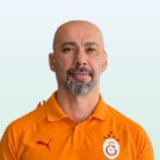
Erkan Özyılmaz

Physiotherapist, osteopath; physiotherapist of the Galatasaray football club

  • Foot, ankle and knee
Türkiye

Hasan Genç

Specialist physiotherapist, osteopath; upper limb, examination and integration

  • Upper limb
  • Examination; integration 4
Türkiye

Hüseyin Başaran

Osteopath and physiotherapist; cranial osteopathy

  • Cranial osteopathy 2
Azerbaijan

Dr. Elfanə Süleymanova

Physician, internist and osteopath; director of the ELF Health Center

  • Examination; integration 4
Germany

Oliver Hintz

Teacher at Osteopathie Schule Deutschland; general osteopathic treatment (GOT)

  • General osteopathic treatment (GOT)

Video lessons

What is a lesson like? See for yourself

Recordings from the 3-day “Fascia 1” training, the Academy's first module: the anatomy and layers of fascia, whole-body assessment, and fascial techniques for the lower limb and lumbar region.

“Fascia 1” — day 3

The gluteal region, the thoracolumbar fascia and the conclusion of the course · 2 hours 22 minutes

Calendar

Upcoming events

  1. 31Oct

    Cranial osteopathy 3

    31 October – 1 November 2026 · Metin Aydın

    Year 3
  2. 5Dec

    Visceral osteopathy 3

    5–6 December 2026 · Hilal Boşnak Özcan

    Year 3

Registration in progress

Osteopathic manual therapy group

The Academy's new group is being formed. First lesson: 12–13 December 2026.

StatusRegistration open
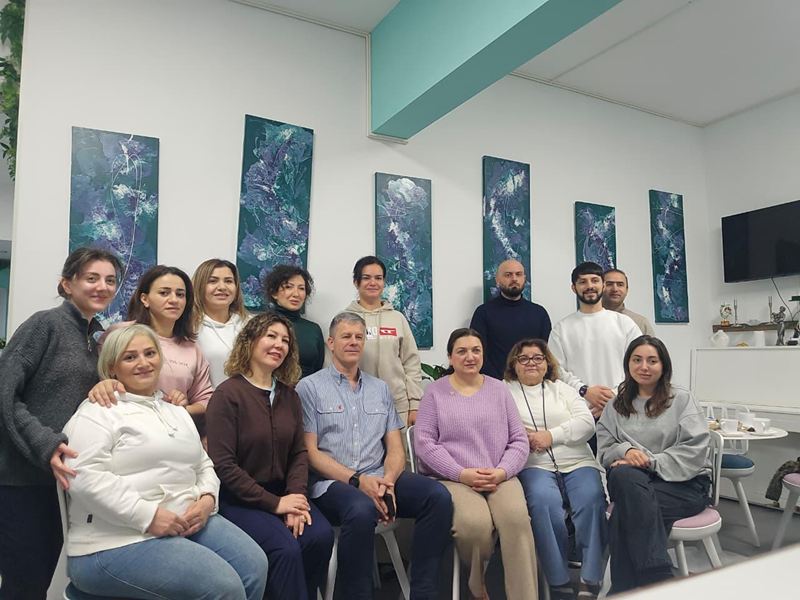
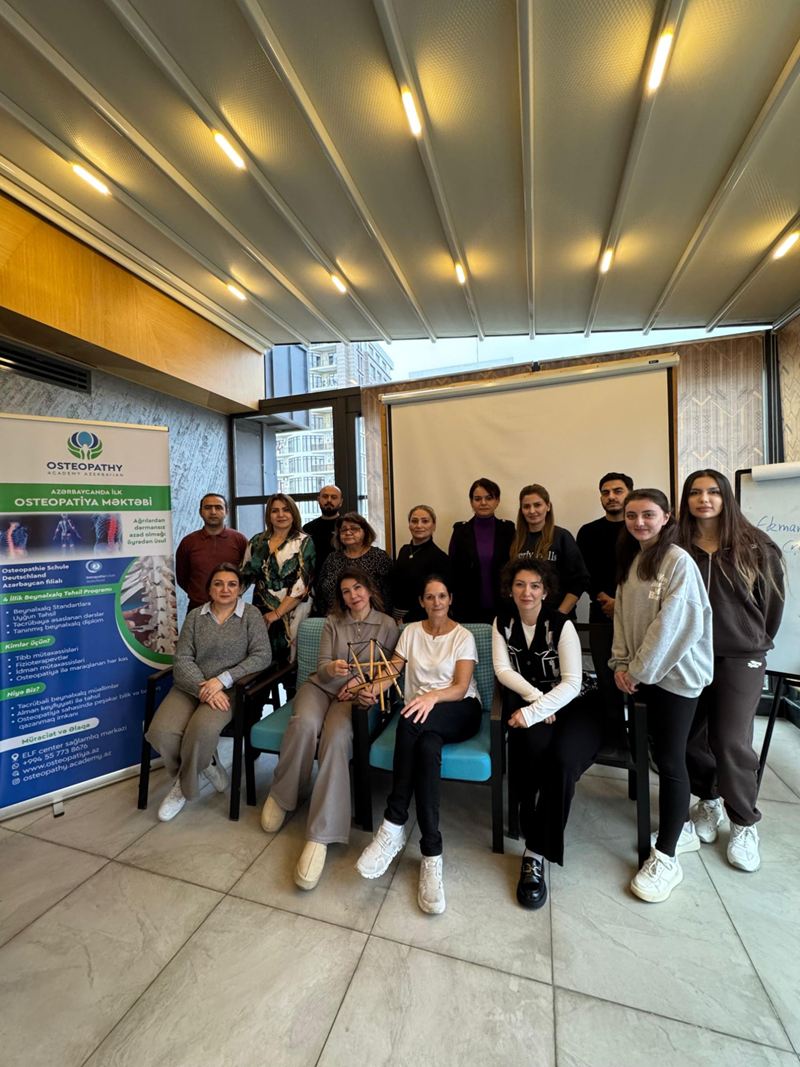
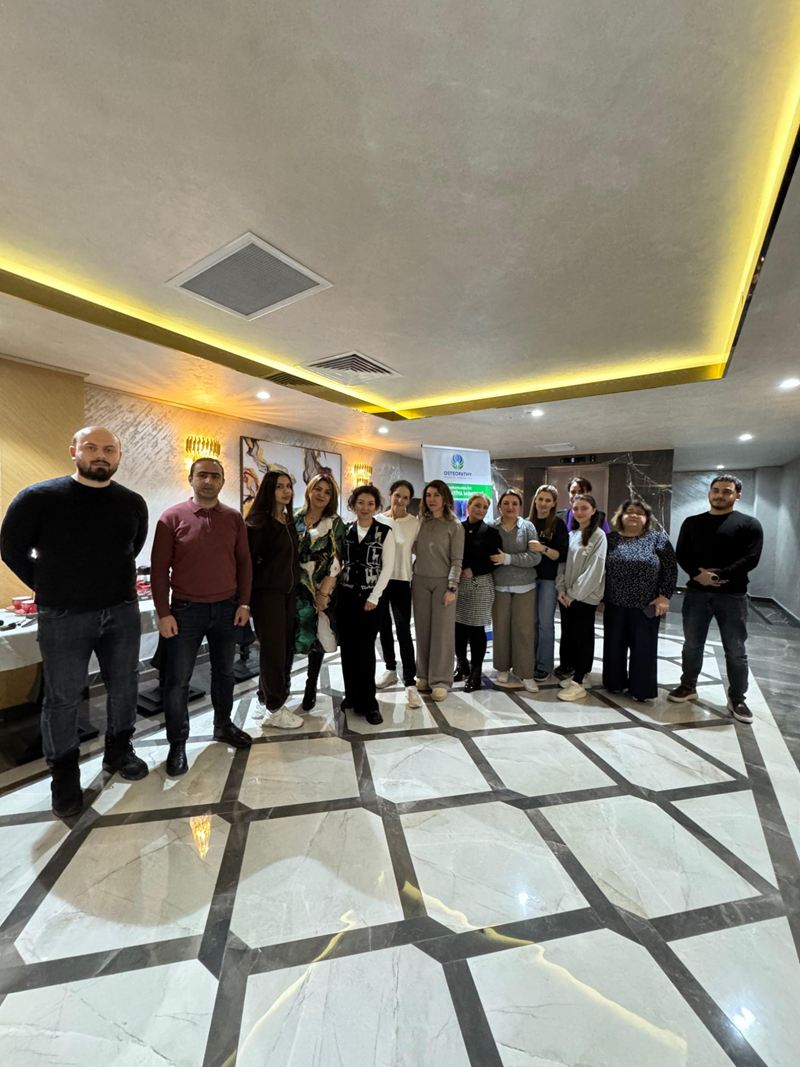
Students and the visiting teacher seated in the ELF Center hall with its paintings.

Osteopathy

What is osteopathy?

Osteopathy is an approach to diagnosis and treatment based on manual contact. It pays particular attention to the relationship between the structure and function of the body and to the organism’s capacity for self-regulation. Osteopathy does not replace medical examination and diagnosis; it is applied as a complement to modern medicine.

FAQ

Frequently asked questions

Who is admitted?

According to the OSD programme guide, the programme is open to physiotherapists, physicians and senior-year students of these disciplines. If your profession is not on this list, clarify the admission requirements with the Academy before registering.

How long does the training last?

4 years. There are 10 modules per year, 40 modules in total.

On which days and at what times are the lessons held?

Once a month, at the weekend. Modules taught by teachers from Türkiye usually last 2 days (Saturday–Sunday); modules taught by teachers from other countries last 3 days (Friday–Saturday–Sunday). Lessons are held at 09:00–13:00 and 14:00–18:00.

Are lesson materials provided?

Yes. The topic of each module is printed as a booklet and given to the students at the start of the module. In addition, video recordings of the topics covered in the lessons are posted in the module's closed Telegram group.

What document is awarded at the end of the training?

According to the sample documents, graduates of the OSD programme receive a diploma, a final examination certificate and a transcript of subjects. Further details are on the Diploma and certificate page.

Can I observe a lesson before registering?

Yes. Those interested in the new group can attend one free trial lesson in one of the modules currently under way.

Ready to start your journey in osteopathy?

Write to us for information about registration, trial lessons and Open Days.

Contact and registration

Search the site

Type a keyword. Results appear as you type. Press Enter for the full list.

Business card

Osteopatiya Akademiyası

Osteopathie Schule Deutschland programme · Baku

ELF Center, Rəşid Behbudov küçəsi 112, Baku

Menu

Accessibility menu

Large panel
Button and keyboard shortcuts
  • Ctrl+U — opens and closes the accessibility menu
  • / — opens the site search
  • Esc — closes the open window
  • Tab / Shift+Tab — move between elements
  • Enter / Space — activates the selected element
  • ← → — move between tabs and gallery images

When the floating button is hidden, the menu can be opened with the accessibility icon in the top bar and at the bottom of the site, and also with Ctrl+U.

Your settings are stored only in this browser and are also applied on the other pages.

Page structure

Sections

Headings