
Osteopathie Schule Deutschland curriculum
4-year osteopathy programme
4-year, 40-module osteopathy education based on the programme of Osteopathie Schule Deutschland, Germany: theoretical and practical lessons, annual examinations, the OSD diploma.
Aim of the programme
To train professional and successful osteopaths by planning the courses with a multidisciplinary teaching approach.
This is how the aim of the programme is stated in the OSD programme guide.
During the training, students learn
- to assess the human body as a single system on the basis of in-depth knowledge of anatomy, physiology and biomechanics;
- to combine the structural (musculoskeletal), visceral and cranial approaches in clinical practice;
- to develop their palpation — manual assessment — skills step by step;
- to recognise conditions that are not suited to osteopathic treatment and to refer the patient to a physician in good time;
- to make clinical decisions and to build a treatment plan.
The programme at a glance
Key facts
- Programme
- Osteopathie Schule Deutschland (OSD) curriculum
- Teaching partner
- Osteopathic College of Turkey (OCT) — OSD's cooperation partner in Türkiye
- Venue
- ELF Center, Rəşid Behbudov küçəsi 112, Baku
- Duration
- 4 years, 40 modules
- Lessons
- One module a month, 2–3 days, at the weekend
- Teachers
- Osteopaths and specialists invited from Germany and Türkiye
- Assessment
- An examination at the end of each year, the graduation examination at the end of year 4
- Document
- OSD diploma (details)
Curriculum
The programme's main subject areas
- Fascia
- Visceral osteopathy
- Cranial osteopathy
- Autonomic nervous system
- Structural osteopathy: pelvis, lumbar region, thorax, neck, upper and lower extremities
- General osteopathic treatment (GOT), SCS, BLT
- Clinical anatomy, biomechanics and radiology
- Differential diagnosis, psychosomatics, nutrition
- Integration and clinical reasoning
Why 4 years?
Osteopathy is not a technique that can be mastered in a course of a few weeks
Palpation skills, the ability to see the connections between the body's different systems and clinical decision-making are formed through experience.
The modular system makes it possible to study each topic separately and to consolidate what has been learnt in practice during the month between modules.
Over the years, the subjects grow in complexity, from the fundamentals (anatomy, palpation, basic techniques) towards integration and clinical reasoning.
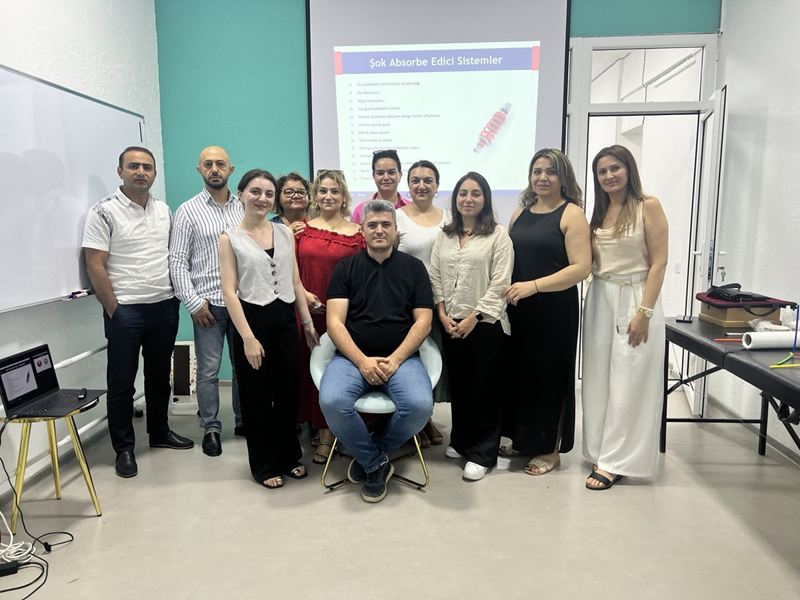
- 6 December 2024The first group began its training.
- 2025 and 2026The first and second academic years were completed; the students passed the annual examinations and progressed to the next year.
- 19 September 2026The third academic year began.
Next steps